
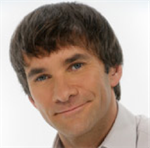
Your Big Vision Needs Dependable Advisers. Here’s How To Get Them. – With Keith Ferrazzi
on May 22, 2009 - 9:46 PM PSTIf your mission isn’t big enough to need a team of supporters. It’s too small. (And you don’t belong on Mixergy.)
But if your vision is large and important enough to leave a mark on the world, then the program I recorded for you with Keith Ferrazzi will help you get the team you need.
Video excerpt
About Keith Ferrazzi

Keith Ferrazzi is the founder and CEO of the business consulting firm Ferrazzi Greenlight. He is the bestselling author of Never Eat Alone, and most recently wrote Who’s Got Your Back.
Text excerpt: Putting your team together
Why are advisory groups so helpful?
It’s easier to hold yourself accountable to a group of other people.
People don’t want to let other people down — particularly if they’ve already created a social infrastructure of caring about someone. You don’t want to let them down.
The basic principle of my book, “Who’s Got Your Back,” is that if you build a social infrastructure which consists of a combination of caring, intimacy, and vulnerability, if you create that intimacy coupled with a commitment to each other, it gives you a higher level of accountability and candor which we need in order to be more successful.
Why does it seem like the most successful people work alone?
Basically the media sucks. They’re evangelizing the lone hero.
What kind of relationships do the most successful entrepreneurs have?
Take Ted Turner for example, I was with him when he was interviewed with Charlie Rose at the Aspen Institute for a Fortune conference. He cried talking about his relationships and how deep and important they were.
The people that I know who are at the top, every single one of them has these kinds of relationships. Jamie Diamond is one of the most aggressive and successful bankers in the marketplace. He would credit the reason he’s not in the same messy soup that everybody else in banking got in, he credited it to his senior associate group.
They’ve been together forever. Mike who was one of my classmates is his CFO. These guys have been together forever. They tell each other the truth. They treat each other, richly and deeply emotionally and they’ve got each other’s backs.
Should your advisers meet in a group or one-on-one?
For me it started with lifeline relationships, one-to-one. So, it was a little hub and spoke.
Then I started realizing that one-on-one relationships will often crumble too quickly because all that has to happen is one week one of you is busy and you don’t call the other. The next thing you know, it’s a month before you talk to each other.
It starts to solidify when you get a group of three or four. The group of three or four is powerful because then it’s institutionalized. Then, you got a meeting time. Then, if one of you is lazy that week, or if two of you are lazy that week, chances are one person is going to show up and kick the rest of you to actually have the meeting.
So, the more formal the system, the more structured, the more likely this is going to work for you
How can you tell if someone should be in your advisory group?
I don’t think you need to reach out to somebody and the first thing you say is, “Hey, do you want to be in my lifeline?” That could overwhelm some people.
Start with, “Let’s go to dinner. I got a house out in Malibu for the summer. Why don’t we go chill out there and, you know, kick back and have some raw oysters and some beer some night?
And as we’re sitting around talking, what I’m testing for is the four principles from the book (generosity, vulnerability, accountability and candor). I’m testing for whether or not I feel safe being vulnerable with you or not. I’m testing for whether or not you’ll return that.
I was vulnerable with one of my friends. Let’s call him Jay. I said, “You know Jay, times have been tough lately and I’m not exactly sure I’m really a good manager and I’m worried even about my leadership skills.”
And it was interesting because he didn’t want to go there. That was too uncomfortable for him. He certainly wasn’t going to be vulnerable himself.
There are other friends where you try to go candor. It’s like, “Hey, you’ve known me for a long time. Tell me what you’ve observed in me that you might have choked back thinking that I didn’t want to hear? I can tell you I do want to hear it. I do want to hear it because I’m looking for feedback and input. Tell me.”
You’re testing for the generosity as well. Do they give a damn about you? Will they show up?
You’re testing for the accountability. After the dinner, you want to say, “Well look, let’s make a promise to each other. I promise this week, I’m going to go investigate this and you promise you’re going to that. Let’s touch base at the end of the week.” It would be interesting to see if they call. And it would be interesting to see if you call, will they return the call.
That’s the “long, slow dinner.” You’re testing for whether they’re the right person.
What’s the first step you can take after watching this program?
Do yourself a favor, think today of one that you would like to invite for your long, slow dinner — or a long slow cup of coffee at Starbucks, or a long slow conversation on the phone.
Pick the one person that you feel safe enough with to reach out to and say, “Hey, do you have a moment? I would like to schedule may be a half hour to chat about what’s going on in my life, where I wanna go and if I am on a right path to get there. I would love your advice.”
Its that simple and that could actually start something that could transform you for a very long time.
I promise you the little movements you make today — and the first move in reaching out to another person to share the brainstorm, to hold you accountable — those little movements today will mean that your trajectory will fundamentally change between failure and success for that issue.
Full program includes
- A small change in mind-set that will surround you with supporters.
- How to put together your personal advisory team.
- The techniques that helped Keith triple his company’s earnings in one year.
Suggested comments
- Do you agree that it takes a team to achieve big goals?
- Who’s on your team? Who do you turn to?
- A few people asked for longer text excerpts. Is this too much text? Too little?
- I want to help you build your group of supporters. What do you need to do that?
Get the full program
View Comments to “Your Big Vision Needs Dependable Advisers. Here’s How To Get Them. – With Keith Ferrazzi”
Leave a Reply
You must be logged in to post a comment.


May 23rd, 2009 at 3:54 pm
What I love about this interview is that it can be applied to the business world AND beyond.
I have to agree with Keith with open-source vs. generosity; it seems that (a good amount of) people get what they need and just get out of there. With the availability of open-source products/concepts, some people seem to take it regardless of whether they need it or not.
Great interview and great questions, Andrew.
May 24th, 2009 at 4:02 pm
Isn't Keith's action item that he leaves off with considered selfish? I recall Seth Godin saying, in his interview, that such requests are selfish and are prone to failure. Seth Godin suggests that such meetings should be mutually beneficial. However, this brings about a couple of questions: (1) How do you help a potential mentor that doesn't need your help? (2) How do you identify what a potential mentor would need help with (as many people like to exude invincibility)?
May 24th, 2009 at 5:23 pm
Pretty nice, will use some info to help growing my blog ;)
May 25th, 2009 at 1:54 am
hi andrew,
cool interview. good people on both sides
a suggestion: when you stop and move on to a different topic because you don't have enough time to let the interviewee explain your doubts, it would be really helpful for us to know what exactly your question was; before you move on.
thanks,
vk
May 25th, 2009 at 7:08 am
very nice & interesting. good luck
May 25th, 2009 at 5:25 pm
I am really touched by this interview, by Keith's energy, and by your generosity. I am at that very difficult place where I feel absolutely “alone” because all the people that surround me depend on me to make it happen. I have tried to surround myself with the group of advisers, but approached it from the perspective of their domain expertise and contacts, which means people who I do not know personally. I need to rethink this approach now in view of what I've learned from this interview. The idea of the group meeting is also very good. Thank you.
May 25th, 2009 at 6:23 pm
I loved Keith's Never Eat Alone book. Thanks for doing this interview.
For those looking to learn more about Keith & his idea, check out the links on this page: http://volcanicmarketing.com/2006/04/22/never-e… It was a review of Keith's first book and has links to a bunch of related resources.
Anyway, for some reason, the video got prematurely cut off. I'm reloading and assume it might have been some network glitch on the web so hopefully it'll go to the end this time.
May 25th, 2009 at 7:56 pm
That's a very helpful resource Melvin. Thanks.
Is anyone else having that video issue?
2009/5/25 Disqus <>
May 25th, 2009 at 7:56 pm
Thanks David!
2009/5/25 Disqus <>
May 25th, 2009 at 7:58 pm
You're not alone in feeling that way.
Every entrepreneur I've talked to seems to have felt the same way throughout
his/her career.
One of my dreams is to have Mixergy facilitate groups like the ones Keith
talked about.
2009/5/25 Disqus <>
May 25th, 2009 at 7:58 pm
I love input like this on my interview questions.
Could you help me understand what section you're referring to? Where did I
forget to say what the question was?
2009/5/24 Disqus <>
May 25th, 2009 at 8:00 pm
I agree. It goes beyond jut business.
Thanks for the input on that open source discussion too.
2009/5/23 Disqus <>
May 25th, 2009 at 8:00 pm
Glad it was helpful. Let me know what else you need to know. I'd like to do
more interviews on this topic.
2009/5/24 Disqus <>
May 25th, 2009 at 8:02 pm
Thanks for giving me an opportunity to explain this. I may not have been
clear enough in the interview.
The relationships Keith is talking about are not mentor/protege
relationships–in which one person knows more than the other and offers a
hand up. They're peer relationships–where each person is equal.
What he was talking about in the clip is how to find someone who has a
spirit of generosity so you can be generous with them.
2009/5/24 Disqus <>
May 26th, 2009 at 3:13 am
it's just something i've notice in your interviews. i've been watching them and looking up resources and ideas continuously for the past 3 days…
maybe it's just me, but in this interview @ 39:10 and in other interviews (nicole, rohit, chance, ….) you said there wasn't enough time to cover a certain topic, but it seemed like you had follow up questions which, for me, would be really important… i could probably research these follow up questions myself if you mentioned them.
i don't usually comment, but i know you listen — unlike many others — and hence the suggestion.
a personal question: what happened that you pay so much attention to what people say without putting what we're saying through a filter (even seth godin does it)? is it because of this interview or is there a story here?
May 26th, 2009 at 6:10 am
Hey – My name is Ryan Geist, I'm Keith's community manager @ Greenlightcommunity.com
I think the whole peer relationship model vs. mentorship model is an important distinction. We're calling these types of relationships “Lifeline Relationships”, and what we mean by that is that if you and I are in a lifeline relationship, we will NOT LET EACH OTHER FAIL. No way, no how. Now, I believe that a mentor could serve as a lifeline relationship for you. But could a mentor be part of a larger LIFELINE GROUP? Probably less likely because the premise of the group is so deep routed in peer support.
To your comment about value proposition. That's what you're referring to, right, when you say meeting should be mutually beneficial? Keith pounds that point home in Never Eat Alone – he refers to this as having a strong value proposition. What a lot of people don't realize – and this often prevents people from ever approaching someone they want to meet – is that you don't need to offer someone the best business opportunity in the world, the best introduction in the world or even the best advice in the world. Sometimes all you need to do is reach out to them with an authentic tone, appeal to them emotionally. I find that my best value proposition is often that I'm young, enthusiastic and just plain want to LEARN. For many people, the opportunity to teach a great student is payment enough.
Check out our brand new blog. We're uploading videos and pictures daily documenting a behind the scenes look at Keith's 18 city book tour over the next 2 months. Feel free to contact me with any questions.
Great discussion, guys.
May 26th, 2009 at 11:20 am
friend and i were just talking about groups
and how a book hasn't been written which exemplifies
collective strategy
keith is definitely on that path
the economic model/process for sustainable collaboration
has still to be invented/discovered :)
May 27th, 2009 at 6:33 pm
Getting a team of advisors to help me is exactly what I need to let me know if I am going on the right path, and maybe help me build the company (experienced CEO). I have thought about doing that before, but I could not find the right people who could see my vision. This video is very helpful.
May 31st, 2009 at 5:47 pm
I live for suggestions like this. Thanks for sending them.
Yes, I often have a list of questions that I don't get to. I also have a
bunch of research that never makes it into the interview. What I usually do
with the questions is save them for another interview. But maybe I should
include them on the site somehow.
Also, I'm thinking of posting my notes on the site. For example, I have
notes on how to setup a master mind group from my prep work for Keith
Ferrazzi's interview. I think that might be helpful to people who are
setting up their own groups.
May 31st, 2009 at 5:50 pm
I recently had breakfast with Mark Suster, a VC @ GRP. He told me that the
entrepreneurs he's talking to keep telling him that they need to talk to
people who are going through the same issues they have.
I think this is a common issue.
Love to hear how you use these ideas to get your group of supporters.
May 31st, 2009 at 5:51 pm
I'm dying to find a way to have Mixergy help with that.
But I think it's too early. The site needs a bigger audience first.
May 31st, 2009 at 5:53 pm
Thanks for adding this hear Ryan!
This is a very helpful comment.
And I hope everyone who reads this post goes to Keith's blog:
http://www.keithferrazzi.com/blog
June 2nd, 2009 at 3:18 pm
Wow, i have connected with this interview on so many levels. I think (not blowing my own trumpet) mainly because i have been definitely living this for the last 6 months or so and have experienced some taste of the rewards.
I think social media is a perfect platform for building relationships, and i really think its very easy to find people to be your lifeline as long as you approach them with a spirit of authenticity and generosity. I think this interview coincides very well with Tara Hunt's and when you put the two together, it comes together very well.
I'm really looking forward to reading the book, because it will help me further crystalise this idea, and eliminate any doubts in my mind, but im glad that i have been on the right track so far.
Keith makes an interesting point about the media, and i felt this also when i read Richard Branson's biography, i just felt something was missing, and it did make him look a little like superman, but now it makes sense and adds up. Media hype.
But i do agree that vulnerability plays an important part, and i myself have noticed when i am transparent with people (to a degree) they in turn want to be the same back, and places like Twitter really help you re-affirm faith in mankind. Twitter is a great vehicle for that in my opinion.
I'm very passionate about this topic, as im sure you can tell. Andrew , do you think Keith would be interested in any feedback or discussion with someone like me?
I would love to brainstorm with him. Ive had so many discussions with people on these very topics already, and its very close to my heart.
I really think that people always seek lifeline relationships with someone that is slightly more successful than them. Not too successful because they feel small, but a little bit more so its something they can comfortably aspire to. And whats great about places like twitter is that its so easy to engage people and get an idea of how much you have in line or in common with them just by following their tweets and responding to them and engaging them. Like yourself (with the software editing example), by being generous & transparent i have also had interesting opportunities and i look forward to more.
But i think, if someone in a position of success was to do a live case study with someone that isnt doing so well, for all to see publicly and help them with their problem, that would have the single greatest impact. this is just my 2 cents. Their should be a vehicle for that.
Andrew, is it ok for me to mention my mastermind group here?
If there are people watching these videos, and they are looking to meet like minded people, who are going through the same struggles as them, personal or business, they are welcome to join our group. It takes places once every 2 weeks on a saturday over skype. Its a semi-informal meeting, and people can discuss any issue they like with a view to brainstorm and progress forward by unlcoking their most creative and authentic potential.
Its only been running a few weeks, and so far there are only 3 of us, but we have already benefitted from it.
We have what i like to call “let me fall and catch me” system going on, which i think works great.
Anyway, sorry for going on, but this is a favourite topic of mine :)
Great interview. Looking forward to the book.
June 6th, 2009 at 10:58 am
Andrew – You have a great natural ability to get in-depth and candid answers from your interviewees. I think Keith was eluding to this as well when he mentioned on a few occasions how much he enjoyed the interview. Please continue to conduct these great interviews that help the rest of us so much.
As to the issues on whether generosity is greater in the offline or online world, I believe it depends on the level of involvement/experience one has in the virtual world. I think at first people tend to seek out what's in it for them. After they get more involved with online communities, they realize it is just as much, if not more, about giving than it is for receiving. I think people eventually find the online world is a great place to reach many people for whom you can provide some specialized knowledge or expertise. Being able to share that information with people who appreciate it (whether they live in the same town or on the opposite side of the planet) allows you to feel a sense of fulfillment that comes from helping others.
In the offline world, it is harder to find someone who is seeking the help / generosity you can provide because we don't have a big badge hanging from our forehead notifying others 'how' we can can help or noting what type of help we need.
In the online world, we have profiles, blogs, tweets, and other forms of easily sharing this information. I think the online 'vulnerability' and 'candor' allows for greater 'generosity'.
June 7th, 2009 at 9:27 pm
The CEO of JP Morgan Chase is Jamie Dimon, not Diamond (paragraph 6 or so). Also, I'm not a hater, but I think the Ferazzi thesis is weak. I've lunched with him a couple of times and I just don't find him genuine. I think Andrew Warner whom I've met as well, much more genuine and real. Ferazzi comes off as a self-promoting name dropper. I have not seen any entrepreneurial success on his part – he had a game company advertising company that went nowhere. I am unaware of any other entrepreneurial success. No shame in that, but how does that qualify him to teach (really, preach)? His sister was going to “die” without his input? Please.
I'll pass and pay attention to those that really have something to teach. I stopped watching after this gem from Ferazzi: “Lives my life helping masses of individuals transform their lives and be more successful”. I don't know anyone successful that would talk that way.
June 8th, 2009 at 4:27 am
The CEO of JP Morgan Chase is Jamie Dimon, not Diamond (paragraph 6 or so). Also, I'm not a hater, but I think the Ferazzi thesis is weak. I've lunched with him a couple of times and I just don't find him genuine. I think Andrew Warner whom I've met as well, much more genuine and real. Ferazzi comes off as a self-promoting name dropper. I have not seen any entrepreneurial success on his part – he had a game company advertising company that went nowhere. I am unaware of any other entrepreneurial success. No shame in that, but how does that qualify him to teach (really, preach)? His sister was going to “die” without his input? Please.
I'll pass and pay attention to those that really have something to teach. I stopped watching after this gem from Ferazzi: “Lives my life helping masses of individuals transform their lives and be more successful”. I don't know anyone successful that would talk that way.